Advertisements

Balance Transfer Mistakes That Hurt Your Credit (And How I Learned the Hard Way)
Here’s a stat that still makes me cringe: nearly 1 in 3 people who do a balance transfer end up with a worse credit score than when they started. I know because I was one of them. A few years back, I thought I was being so clever moving my credit card debt to a shiny new 0% APR card. Turns out, I made almost every mistake in the book, and my credit score took a nosedive that took me over a year to fix!
If you’re thinking about a balance transfer — or you’ve already done one — stick with me. I’m going to walk you through the biggest balance transfer mistakes that hurt credit so you don’t have to learn the painful way like I did.
Opening Too Many New Accounts at Once
This was my first blunder. I got denied for the card I really wanted, so I applied for two more the same week. Each application triggered a hard inquiry on my credit report, and those dings added up fast. Three hard pulls in one week? Yeah, that’s not a great look to lenders.
Hard inquiries can lower your score by 5-10 points each, and they stick around for two years. The lesson here is simple — do your research first, check prequalification tools, and only apply for the one card you’re most likely to get approved for. Being strategic saves your score a lot of unnecessary damage.
Advertisements
Maxing Out Your New Card’s Credit Limit
So here’s something I genuinely didn’t understand at the time. When I transferred my $4,800 balance to a card with a $5,000 limit, my credit utilization ratio shot up to 96% on that card. That’s basically the credit score equivalent of a red alarm going off.
Credit utilization — how much of your available credit you’re actually using — accounts for about 30% of your FICO score. Experts recommend keeping it below 30%, ideally under 10%. If your balance transfer eats up most of your new card’s limit, your score is gonna suffer even if you’re paying 0% interest.
Closing Your Old Credit Card Right Away
After I moved my balance, I closed the old card immediately. Felt good in the moment, like I was “cleaning house” or whatever. But that was probably my dumbest move.
Closing the old account reduced my total available credit, which pushed my overall utilization even higher. On top of that, it shortened my average age of accounts, which is another factor in your credit score. Keep old cards open, even if they have a zero balance — just toss them in a drawer if you need to.
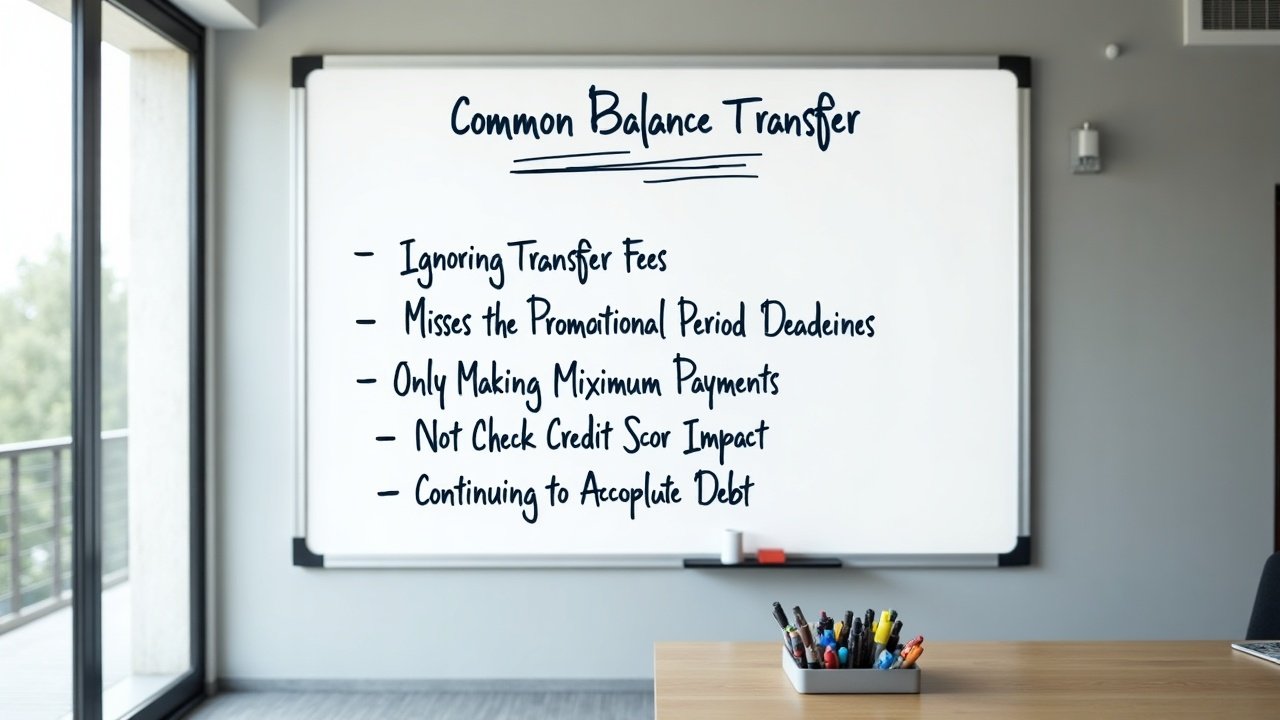
Missing the Promotional Period Deadline
I got so comfortable with that 0% APR that I kinda forgot it had an expiration date. When the promotional period ended after 15 months, I still had about $1,200 left on the card. The regular APR kicked in at something like 22.99%, and suddenly my “smart” financial move was costing me more in interest than my original card would have.
Always mark the end date of your introductory period on your calendar. Seriously, set multiple reminders. Create a payoff plan that gets your balance to zero before that deadline hits.
Racking Up New Debt on the Old Card
This is the trap that gets so many people, and yeah, I fell right into it. Once my old card had a zero balance, it felt like free money just sitting there. Within a few months, I’d charged another $2,000 on it. Now I had debt on two cards instead of one.
A balance transfer is not a debt elimination tool — it’s a debt management tool. If you don’t change your spending habits, you’re just digging a deeper hole. I had to learn that the hard way.
What I Wish Someone Had Told Me Sooner
Look, balance transfers can be a genuinely smart strategy for paying down credit card debt faster. But they’re only helpful when you go in with a solid plan and avoid these common pitfalls. Your credit score is fragile, and one careless move during the transfer process can set you back months.
Take it from someone who’s been there — do the math, read the fine print, and treat the whole thing like the serious financial decision it actually is. And if you want more tips on protecting and building your credit, head over to Score Cove where we break this stuff down in plain English. Your future self will thank you!